

At a time when countries are tightening borders, reassessing alliances and questioning the value of multilateral cooperation, Japan is pursuing a different course.
It is investing in people.
Inside the classrooms and training centres of the Japan International Cooperation Agency (JICA), professionals from across Africa, Asia and Europe are exchanging ideas on how to strengthen businesses, institutions and communities.
For Kenya, the lessons are particularly significant.

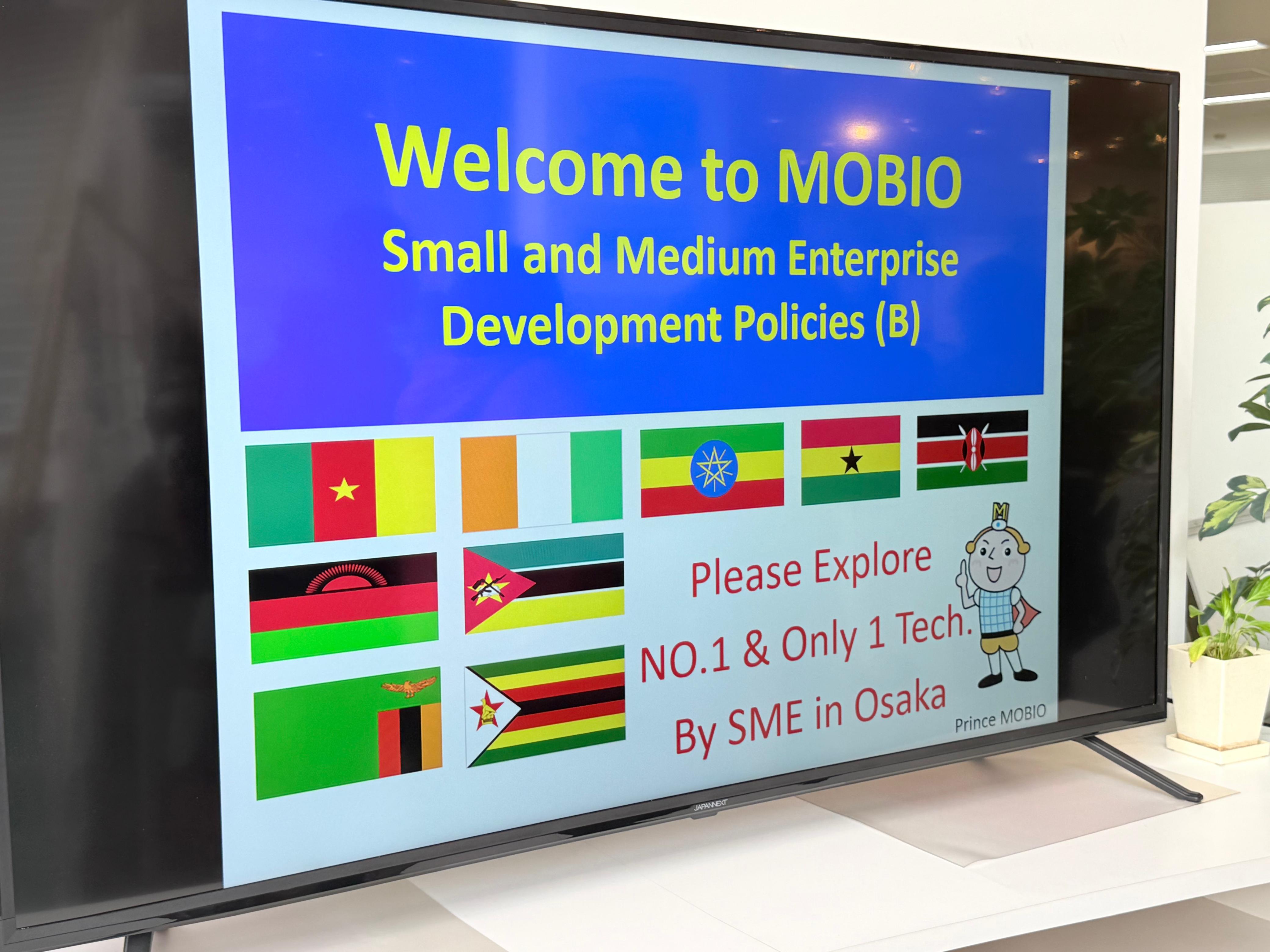
The country's participation in JICA-supported programmes focused on small and medium enterprise policy and tourism development comes as Nairobi seeks to strengthen the micro and small business sector, create employment and expand economic opportunities for its young population.
The experience also offers a window into Japan's distinctive approach to development cooperation: less about exporting ready-made solutions and more about sharing knowledge, systems and institutional experience.
"Development is built through partnership and not isolation," is the message emerging from the programme.
A classroom without borders
The participants gathered in Japan came from countries with very different economic and political histories.
Bosnia and Herzegovina, Kyrgyzstan, Indonesia, Cameroon, Ghana and Kenya were among those represented.
Some were working on SME policy. Others were focused on tourism and sustainable development.
Yet the problems they were discussing were remarkably similar.
How can governments help small businesses become more productive?
How can young people be encouraged to create enterprises rather than depend solely on formal employment?
How can tourism generate income for local communities without destroying the cultural and environmental assets on which it depends?
And how can governments build institutions capable of turning policy into practical results?
The classroom became a space where those questions were examined through different national experiences.
For participants, the value was not simply in listening to Japanese lecturers.
It was in comparing Japan's experience with what happens at home.
One participant described the programme as a "door" through which professionals could share experiences and learn about practices being applied elsewhere.
Another urged future applicants to take the opportunity seriously.
The training, he said, required hard work, careful listening and a willingness to learn from Japan's own culture of discipline.
Japan's quiet development model
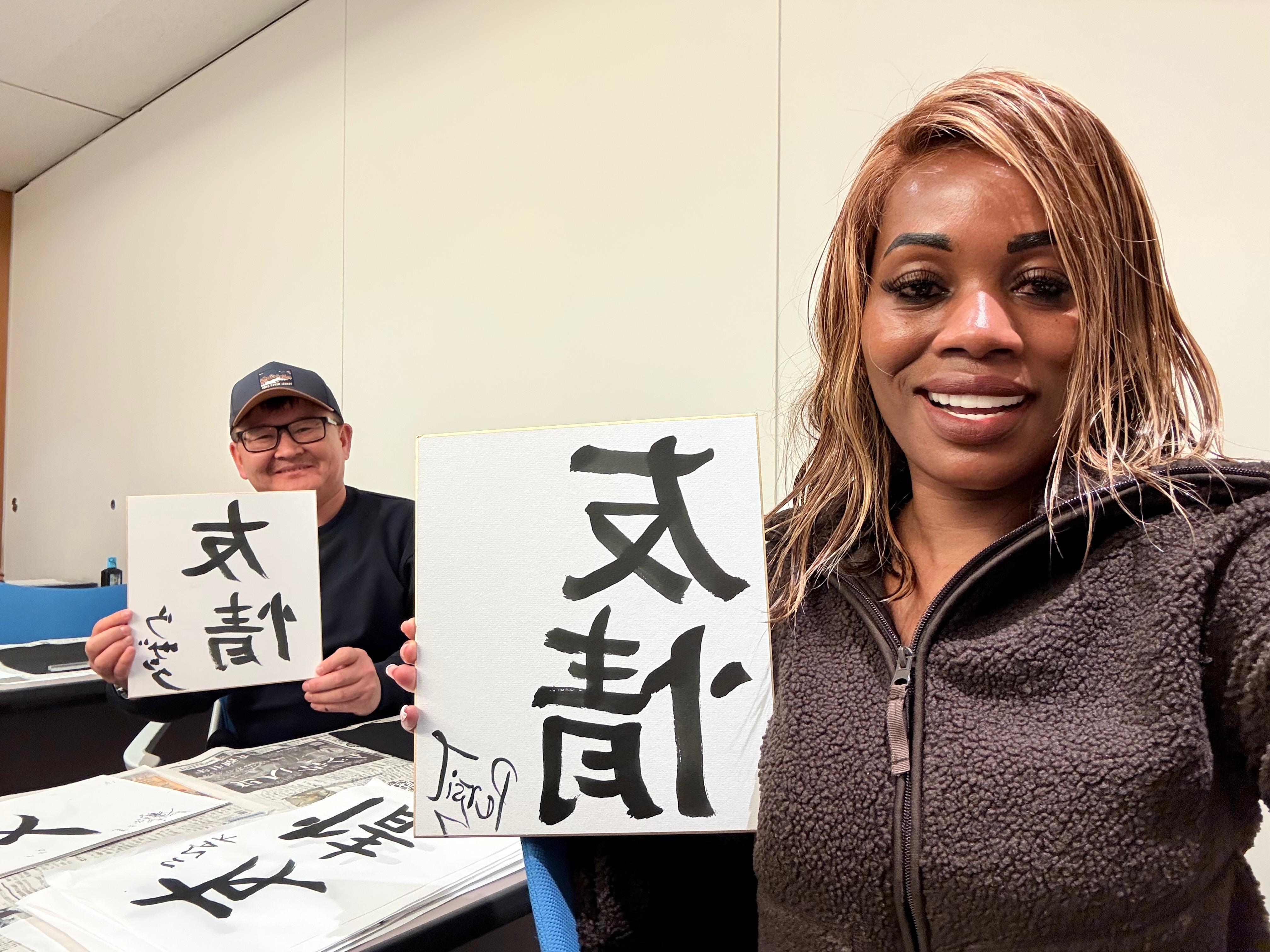
Japan's approach is not necessarily dramatic.
There are no grand declarations about exporting a particular political or economic ideology.
Instead, the emphasis is on systems.
Participants are exposed to Japanese approaches to enterprise development, workplace organisation, tourism, community participation and institutional coordination.
The philosophy is based on the idea that knowledge can be transferred without being imposed.
A Japanese solution may not work unchanged in Kenya, Ghana or Kyrgyzstan.
But the principles behind it can be examined, questioned and adapted.
That distinction is important.
Development cooperation can easily become a one-way process in which one country provides resources and another receives them.
JICA's model seeks to create something different: professionals who return home with knowledge that they can adapt within their own institutions.
In that sense, the investment is not only financial.
It is an investment in human capital.
Why SMEs matter to Kenya
For Kenya, the SME component has a direct connection to one of the country's biggest economic challenges: creating sustainable opportunities for a growing population.
Small and medium enterprises are central to livelihoods across the country.
They provide employment, support households and give millions of people a route into entrepreneurship.
But running a business is not simply a question of having access to money.
Entrepreneurs need markets, skills, technology, infrastructure and a regulatory environment that allows them to grow.
Government institutions also need to understand what businesses actually require and when that support is most effective.
That is where the lessons from Japan become relevant.
A Kenyan participant in the programme said the experience would strengthen his commitment to working with colleagues in government to improve policies and ensure that entrepreneurs receive "relevant support at the right time".
The challenge is turning lessons from a Japanese classroom into practical policy in Kenya.
The entrepreneurship question
The conversations also raised a broader question about attitudes towards entrepreneurship.
One participant contrasted Japan's culture of enterprise with the situation in some African countries, where young people often prioritise finding salaried employment over starting businesses.
Japan's example, he suggested, demonstrates that entrepreneurship is not necessarily confined to the young.
Older people can remain economically active, innovative and entrepreneurial.
For African countries with rapidly growing youth populations, that raises a fundamental policy question.
How do governments create environments where young people see entrepreneurship not as a last resort, but as a viable economic pathway?
Training alone cannot answer that.
It requires access to markets, financing, technology, mentorship and policies that allow businesses to survive long enough to grow.
Why human capital comes first
One of the clearest themes emerging from the programme is the relationship between people and infrastructure.
Infrastructure is often presented as the visible symbol of development — roads, buildings, industrial parks, transport networks and digital systems.
But participants argued that infrastructure ultimately depends on people.
Engineers must design it.
Skilled workers must build and maintain it.
Technicians must operate it.
Entrepreneurs must create businesses around it.
Researchers and innovators must improve it.
Without those skills, infrastructure can become an asset without the human capacity required to maximise its value.
One participant put it simply: infrastructure needs educated, skilled and innovative people.
That is perhaps one of the most important lessons Japan offers.
Its own development has been built over decades through sustained investment in education, skills, technology, institutions and productivity.
Tourism beyond the postcard
The second programme brought another dimension to the discussion: tourism.
Tourism is often associated with destinations, hotels and visitors.
But for the professionals studying it in Japan, the sector is also about communities, culture and enterprise.
A participant from Kyrgyzstan explained how tourists visiting the country often seek out art galleries, museums and local artists.
In some communities, artists sell their work directly to visitors.
The connection between art and tourism therefore creates an economic opportunity while also giving visitors a deeper connection with local culture.
That idea has relevance far beyond Kyrgyzstan.
For countries such as Kenya, tourism can create markets for small businesses, artists, craftspeople, guides, hospitality operators and community enterprises.
But sustainable tourism requires more than attracting visitors.
It requires protecting the cultural and natural assets that make destinations attractive in the first place.
Learning outside the classroom
The JICA programmes deliberately combine classroom learning with practical exposure and field visits.
That approach matters because development policies do not operate in textbooks.
Participants need to see how systems function in real communities and workplaces.
A tourism professional from Bosnia and Herzegovina described the training as comprehensive because it combined practical learning with exposure to local communities and the tourism industry.
The field experience also allows participants to ask a different set of questions.
Why does a particular system work?
What institutions support it?
How much of it depends on Japanese culture?
And, crucially, what could realistically be adapted elsewhere?
Those questions are often more valuable than simply copying a successful model.
A meeting of different worlds
Teaching professionals from multiple countries is not without its challenges.
Language and cultural differences can complicate communication.
One participant acknowledged the difficulty of capturing every point made by lecturers when professionals from different backgrounds are learning together.
But that challenge is also part of the programme's value.
Participants must listen carefully, interpret unfamiliar ideas and understand perspectives shaped by different experiences.
The result is a kind of international laboratory.
A Kenyan policy question can be examined alongside an experience from Ghana.
A tourism challenge in Kyrgyzstan can generate ideas for another country.
An approach used in Japan can be questioned by professionals from Africa or Europe.
The learning therefore moves in several directions.
From Japan back to Kenya
The ultimate test of the programme begins when the participants leave Japan.
Certificates and photographs may mark the end of the course.
But the real measure will be what happens when they return to their institutions.
Can lessons from Japan improve SME policy?
Can government agencies coordinate more effectively?
Can entrepreneurs receive support at the point when they need it?
Can young Kenyans be encouraged to create businesses?
Can tourism generate greater value for communities?
These are much harder questions than completing a training programme.
They require political commitment, institutional coordination and sustained implementation.
Japan's own experience suggests that transformation is rarely achieved through a single intervention.
It is accumulated over time.
Cooperation as diplomacy
There is also a wider story here.
International cooperation is often measured in terms of money, infrastructure and physical projects.
But there is another form of cooperation that is less visible.
People.
When professionals from different countries spend weeks learning together, they develop relationships that can continue after the programme ends.
They exchange contacts, experiences and ideas.
They gain a better understanding of one another's countries.
Those relationships can become the foundation for future cooperation between institutions.
Human capital, in this sense, becomes a form of diplomacy.
It builds bridges without requiring countries to become identical.
The responsibility comes home
For the Kenyan participants, the opportunity comes with a responsibility.
The lessons learned in Japan cannot simply remain in Japanese classrooms.
They must be interpreted through Kenya's own realities.
That means taking what works, questioning what does not and adapting ideas to local institutions.
The same applies to the other participating countries.
A participant from Cameroon spoke of returning home with a "package" to share with colleagues.
A participant from Bosnia and Herzegovina used the opportunity to invite others to discover her country and experience its culture.
A participant from Kyrgyzstan demonstrated how tourism can connect visitors with local artists and communities.
Each person leaves Japan carrying something different.
But there is a common thread.
They are returning home with ideas.
Beyond aid
The significance of the programme lies in that distinction.
This is not simply a story about one country helping another.
It is about countries learning from one another.
Japan provides experience and knowledge, while participants bring their own perspectives and challenge assumptions.
For Kenya, the objective should not be to reproduce Japan.
It should be to strengthen Kenyan institutions so they can solve Kenyan problems more effectively.
That is where the idea of development beyond aid becomes important.
Aid can provide resources.
Training can provide knowledge.
Partnerships can open doors.
But sustainable development ultimately depends on what countries do with those opportunities.
A short course with long-term implications
As the participants prepared to return to Kenya, Ghana, Cameroon, Indonesia, Kyrgyzstan and Bosnia and Herzegovina, the mood was one of departure — but also continuation.
They had spent time in classrooms.
They had visited communities.
They had listened to lecturers.
They had exchanged experiences with professionals from different continents.
And they had seen another way of approaching development.
Japan's approach is quiet, disciplined and long-term.
Its central lesson is that economic transformation depends not only on what governments build, but on the people capable of sustaining, improving and innovating around those systems.
For Kenya, that lesson comes at an important moment.
The country's economic future will depend heavily on whether its institutions can turn the energy of millions of entrepreneurs and young people into productive enterprises and sustainable jobs.
International partnerships can help.
But the responsibility remains national.
As the participants leave Japan, they take home no simple blueprint.
They take something potentially more useful: questions, relationships, experience and ideas.
Because development is neither simply imported nor exported.
It is cultivated — through institutions, cooperation, discipline and people.
And in an increasingly uncertain world, that may be one of the most enduring lessons Japan has to offer.
Watch Video: https://www.youtube.com/watch?v=1_5WBhgK20w
Related Stories
- AI, smartphones and survival: Inside Nairobi’s changing street photography business
- Kenya Ends Sugar Import Era? Kagwe Freezes New Licences as Farmers Await Historic Board Elections
- Lake Naivasha is losing its natural filter. Can restoring papyrus help save the fishery?
Category: Features · Related Topic: Social Health Authority (SHA)
About the Author
Persil Telewa is a media and communications professional, TV host, moderator and trainer passionate about storytelling that informs, inspires and creates meaningful engagement. With experience in digital marketing, audience engagement and professional training, Persil brings energy, clarity and strong communication skills to every platform. Her work connects people, ideas and opportunities, empowering diverse audiences through compelling conversations and impactful storytelling.. www.persiltelewa.com
 Facebook
 Twitter / X
 WhatsApp
 LinkedIn
 Telegram
 Reddit