
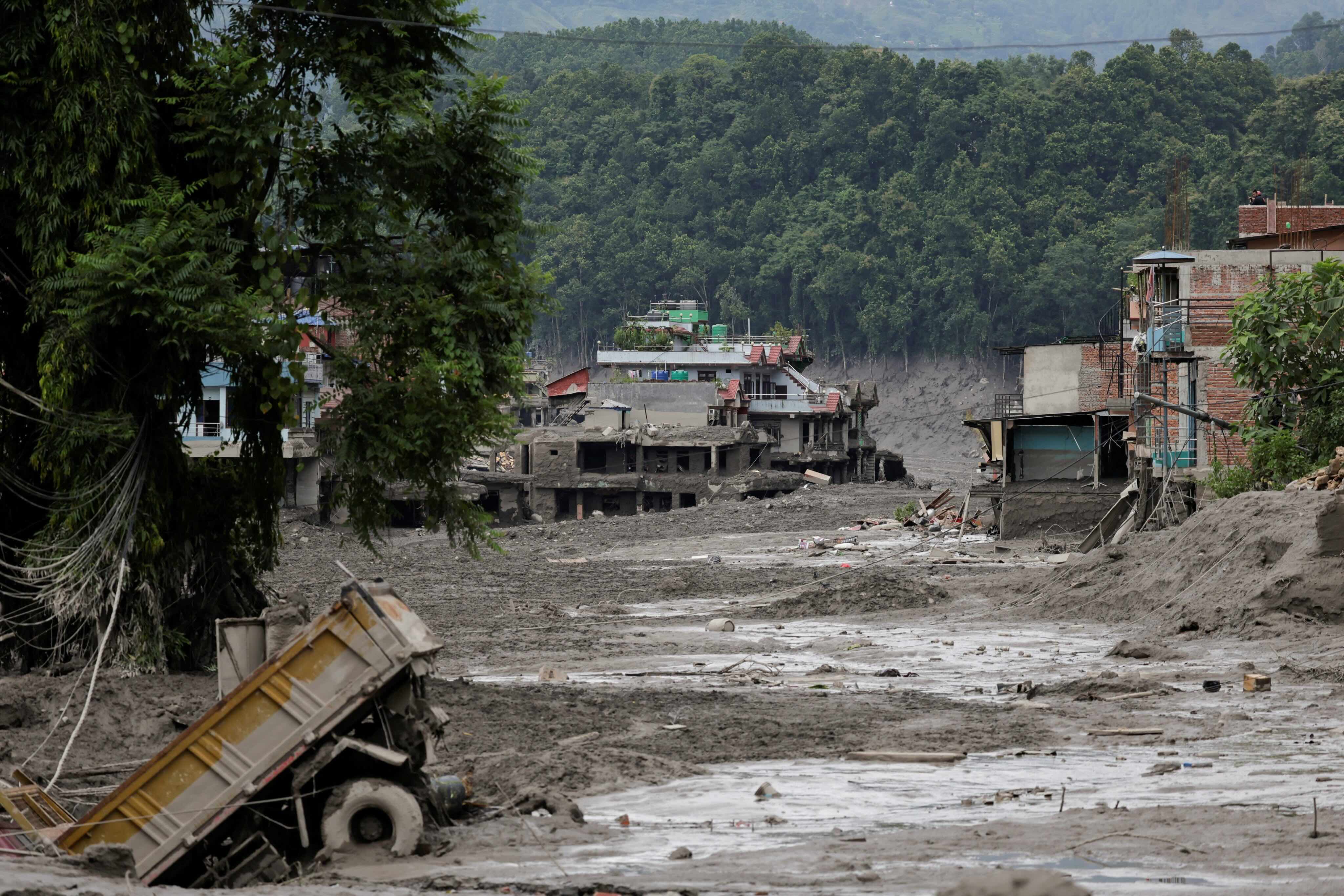
A sudden wall of water, mud and rock has swept through valleys along Nepal's border with China, destroying homes, roads and bridges and leaving hundreds of people missing.
The disaster struck on Wednesday in Rasuwa district, around the settlements of Timure and Syapru Besi, before floodwaters moved downstream into areas including Nuwakot and Dhading.
Across the border, China's Tibet region was also badly affected, with the Gyirong border port reporting major damage to roads, electricity and communications.
The situation remains fluid, with casualty figures changing as rescue teams reach affected areas.
What caused the flood?
Early evidence suggests this was not a conventional rainfall-driven flood.
Scientists and Nepalese authorities believe an ice and rock avalanche in the high Himalayas blocked the Lhende Khola, a tributary of the Bhote Koshi River. Water then accumulated behind the debris before the blockage gave way, sending a powerful surge downstream.
Reuters reported that a glacier collapse, possibly associated with seismic activity, triggered the torrent of mud, rock and water.
Importantly, there was little or no rainfall in the immediate area when the flood struck, according to local reporting. That helps explain why people living downstream had little warning of what was coming.
The precise chain of events is still being investigated.
Entire communities were swept away
The flood moved rapidly through the mountain valleys, carrying vehicles, buildings and other infrastructure with it.
In Rasuwa, the areas around Timure and Rasuwagadhi were among the worst hit. Roads and bridges were destroyed, while hydropower and other infrastructure were damaged.
The flood then moved downstream towards the Trishuli river system, affecting communities in Nuwakot and Dhading.
On the Chinese side, the Gyirong border crossing was hit by a mudslide, cutting roads, power and communications. Chinese authorities reported casualties and people missing, although figures were still being verified.
Hundreds of people are missing
Reuters reported on Thursday that at least 162 people had died, with hundreds still missing as rescue operations continued.
Earlier figures from Nepal's authorities were lower, illustrating how quickly the numbers have changed as bodies have been recovered and missing-person reports consolidated.
A large number of those unaccounted for are foreign nationals.
The area is an important route for travellers heading towards Tibet, including pilgrims travelling to Mount Kailash and Lake Mansarovar. Reuters reported that more than 400 foreign tourists were among those initially reported missing.
Police officers, hydropower workers and other local personnel are also among those missing.
India has been coordinating with Nepal over rescue and relief efforts, while other countries are working to establish the whereabouts of their nationals.
Rescue efforts continue
Key Points
— Triple R (@RaviRRana) August 26, 2026
What happened: A massive wall of water, mud, and debris surged through river valleys along the Nepal-China (Tibet) border. It destroyed villages, roads, bridges, and infrastructure. The flood originated near the border and hit both sides.
Location: Primarily Rasuwa… pic.twitter.com/CdMh2NUUL3
Nepal's army and other emergency teams have been deployed to search for survivors and recover bodies.
Helicopter operations have been complicated by the mountainous terrain and damaged infrastructure.
Authorities are also concerned about the possibility of another sudden flood if debris continues to block waterways upstream.
The Nepalese government has urged people living near rivers to move towards safer, higher ground while the situation is assessed.
That warning is particularly important because the original blockage appears to have played a central role in producing the sudden surge.
Why experts are watching the Himalayas
The disaster has also renewed attention on the risks posed by unstable glaciers and high-altitude landscapes.
Scientists have increasingly warned that warming temperatures are altering mountain environments, potentially increasing risks from glacier collapse, landslides and glacial lakes.
But experts caution against attributing any individual disaster to climate change without detailed scientific analysis.
Nepal has experienced similar flooding in the Bhote Koshi area before. A major flood in July 2025 killed people and damaged the Friendship Bridge linking Nepal and China. Researchers attributed that event to the sudden drainage of a glacial lake.
The latest disaster is therefore part of a wider pattern of hazards confronting communities living in some of the world's most challenging mountain environments.
A separate weather story in East Africa
The Nepal disaster is not connected to the El Niño rainfall forecast for East Africa.
However, Kenya's meteorological authority is separately forecasting above-average rainfall across much of the country during the October-November-December season, with prolonged wet spells and isolated storms possible in several areas.
KMSA says the 2026 El Niño is strengthening and that the Indian Ocean Dipole could also become positive, although the timing and strength remain uncertain.
Those forecasts describe a different weather and climate situation from the Himalayan disaster.
For now, the focus in Nepal remains on finding those still missing, reaching isolated communities and preventing further loss of life as rescue operations continue.
The full scale of the disaster may not be known until emergency teams can reach the most severely affected areas.
You may also like
Category: International
Related Video: Human Ladder Reaches Dangerous Heights as Climbers Keep Going
Related Explainer: Kiharu Technical College September Intake 2026: Courses, Skills and New Opportunities
 Facebook
 Twitter / X
 WhatsApp
 LinkedIn
 Telegram
 Reddit