
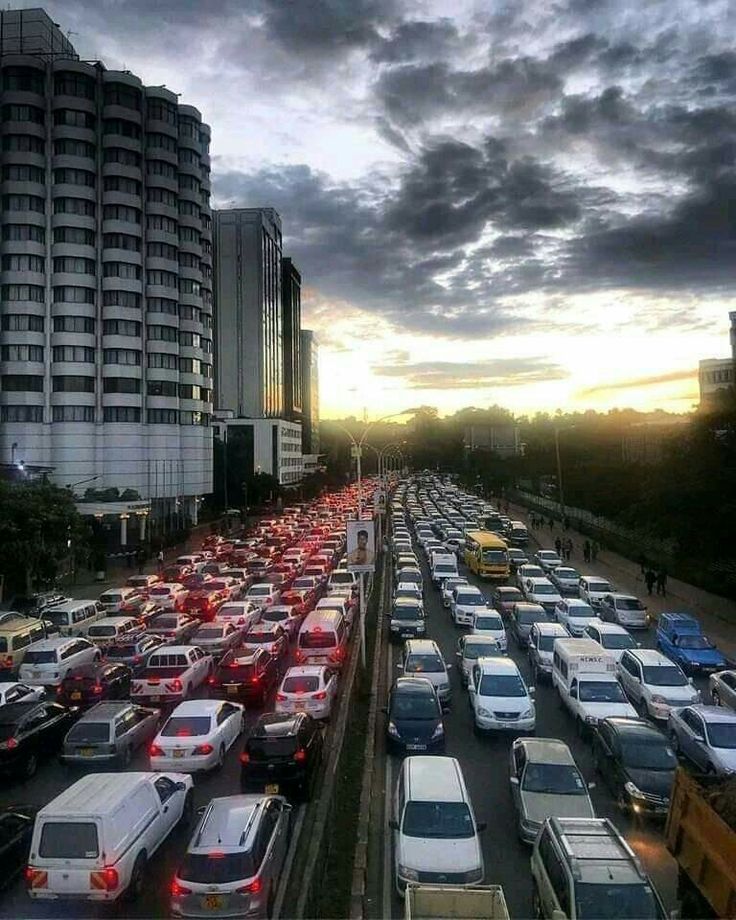
"I'm five minutes away." A phrase that has probably caused more confusion in Nairobi than anyhwhere in the country because in this city, five minutes could mean twenty, or even forty seven. For many of us, traffic has become such a normal part of life that we hardly question it anymore. We laugh when someone says they left home at 5am and still arrive late. Beneath the humor is a quieter story that rarely makes headline. Nairobi traffic isn't just stealng our time, it's also stealing moments.
Attributing data from TomTom Traffic index, the Nairobi traffic report reveals that the time lost due to traffic in rush hour in 2025 is 109 hours, equivalent to 4 days 13 hours, which is 3 hours 50 minutes more than in 2024. Every evening somewhere in the city, a university student arrives home too exhausted to revise for the following day's exam. A small business owner misses an important client. Friends cancel plans because "traffic is too much." Children fall asleep before saying goodnight to a parent who is still trying to get home.
We often measure traffic in kilometers, fuel costs and travel time. Perhaps we should start measuring it in birthdays missed, conversations postponed, books never read as well as memories that never happened. The hidden cost of Nairobi traffic isn't always visible on the dashboard, but sometimes carried in our bodies. After spending two or three hours gripping the steering wheel or in a crowded matatu, patience wears thin, tempers rise and exhaustion follows us home, arriving physically present but mentally drained.
Psychologists have linked long, stressful commutes with increased stress levels and reduced well-being. You don't need a research paper to tell you that. Spend one hour in traffic after a long day at work and your shoulders and back will probably explain it better than any expert ever could.
The irony of it all is that we live in a city that never seems to have enough time. We're always rushing, running to meetings and chasing deadlines. Yet everyday, thousands of us spend hours doing the exact opposite of being productive, waiting for the car in front to move five meters. Amid the frustration of waiting in traffic , Nairobi residents have found remarkable ways to cope. Matatus have become concert halls, catching up with people on phone and vendors weaving in between vehicles selling everything from snacks to umbrellas, creating an economy that exists because traffic does. Even in congestion, people find ways to adapt, but adaptation shouldn't become acceptance.
A growing city will always face transport challenges. Yet better public transport, smarter traffic management, safer walking and cycling infrastructure and flexible work arrangement could make a meaningful difference. These conversations matter bacause traffic is not just about roads but also about the quality of life.
The next time you are sitting in traffic, glance around. You'll see more than cars. You'll see parents trying to get home, students hoping not to miss class and healthcare workers finishing long shifts. The tragedy of Nairobi traffic might not be that it makes us late. It might be that it quietly steals pieces of our lives while convincing us it's simply a norm of living in the city.
Continue reading
More stories selected for youYou may also like
Category: Features
Related Video: Dolly Parton’s Family Announces Her Passing in Emotional Tribute
Related Explainer: EXPLAINER: How can one mother give birth to five babies? The science behind Kenya’s rare quintuplets
 Facebook
 Twitter / X
 WhatsApp
 LinkedIn
 Telegram
 Reddit